Prepared for Zhejiang Zhongyu Technology Co., Ltd.
Zhejiang Zhongyu Technology Co., Ltd.
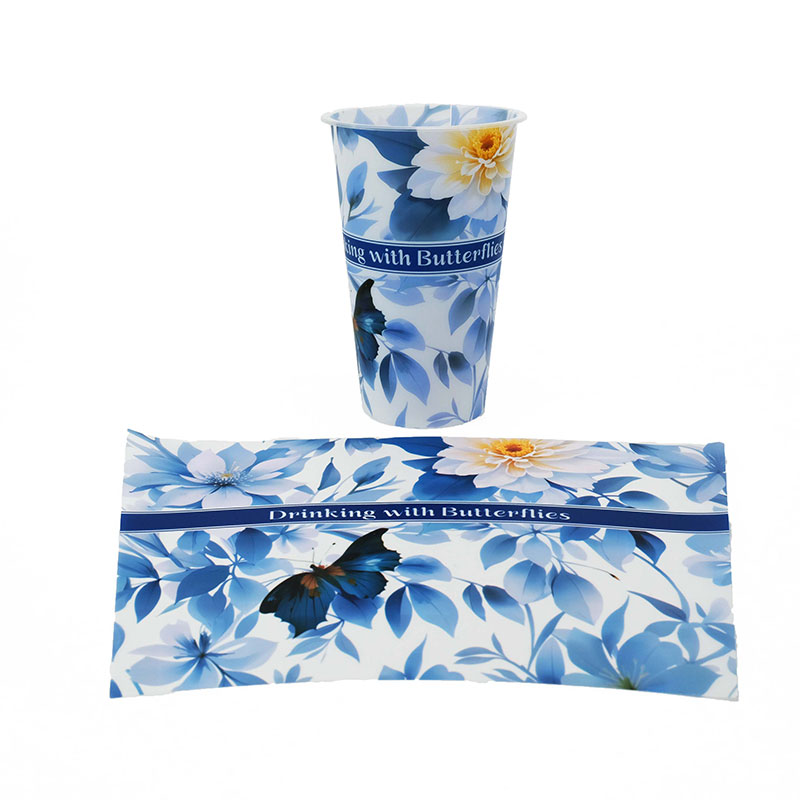
In-mold labels (IML) are printed labels placed inside a mold before a plastic product is formed. During molding, the label becomes integrated with the container or part, creating a decorated surface without a separate post-molding labeling step.
From food tubs and household containers to industrial pails and consumer products, in-mold labeling is widely used when brands need high-quality graphics, durable decoration, efficient automated production and a clean, integrated appearance.
In this guide, Zhejiang Zhongyu Technology Co., Ltd. explains how IML works, which materials and finishes are commonly used, how it differs from pressure-sensitive labels, and what plastic packaging manufacturers should consider when choosing an IML label supplier.
An in-mold label is a pre-printed label designed to be placed inside a mold before a plastic article is formed. Depending on the application, IML can be used with injection molding, blow molding or thermoforming processes. During forming, the label bonds or fuses with the plastic surface and becomes part of the finished product.
This is the main difference between IML and conventional labels: the label is applied during the manufacturing process rather than attached after the container has already been made.
For brand owners, this creates a smooth, integrated look. For converters and molders, it can also reduce or eliminate a separate labeling operation after molding.
Although every project is different, a typical IML workflow includes the following stages:
1. Artwork and dieline preparation — the label shape is engineered to match the container geometry, mold and decoration area.
2. Material selection and printing — the artwork is printed on an IML-compatible film selected for the molding process and required appearance.
3. Die cutting and finishing — printed sheets or rolls are converted into individual labels with controlled dimensions and clean edges.
4. Label placement in the mold — an automation system or robot positions the label accurately inside the mold, often using static charge or another holding method.
5. Molding and product release — molten or formed plastic contacts the label, the product takes shape, and the decorated part is removed from the mold.
Because IML takes place inside a high-speed production cycle, dimensional accuracy, label flatness, static performance, material compatibility and consistent cutting are all important. A label can look perfect in isolation but still create production problems if it does not run reliably on the customer’s molding line.
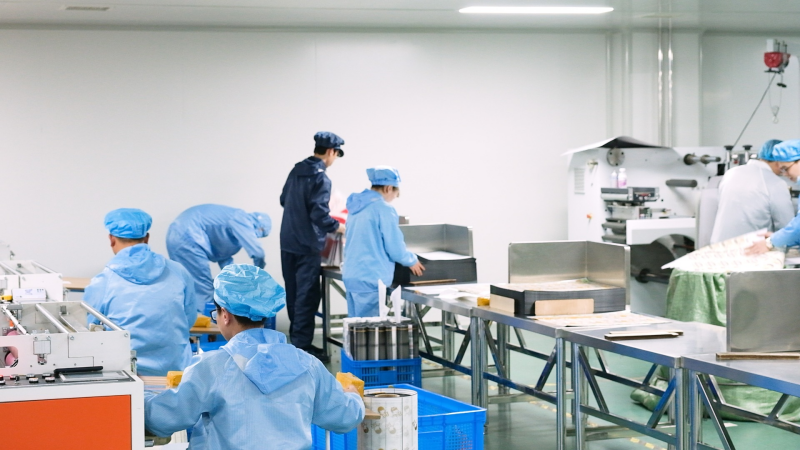
Production and converting environment at Zhejiang Zhongyu Technology Co., Ltd.
Both technologies are useful, but they solve different packaging needs. The table below summarizes the typical differences.
| Feature | In-Mold Labels (IML) | Pressure-Sensitive Labels |
| When applied | During molding | After the container is molded |
| Adhesive layer | Usually no separate pressure-sensitive adhesive | Typically uses a pressure-sensitive adhesive |
| Appearance | Integrated with the plastic surface | Visible label layer applied to the surface |
| Water / moisture exposure | Strong suitability when correct film and printing system are selected | Depends strongly on facestock, adhesive and application conditions |
| Automation | Can be integrated into the molding cycle | Requires a separate labeling step or labeling machine |
| Best fit | High-volume plastic packaging and durable decoration | Flexible labeling across many package types and production volumes |
High-quality decoration
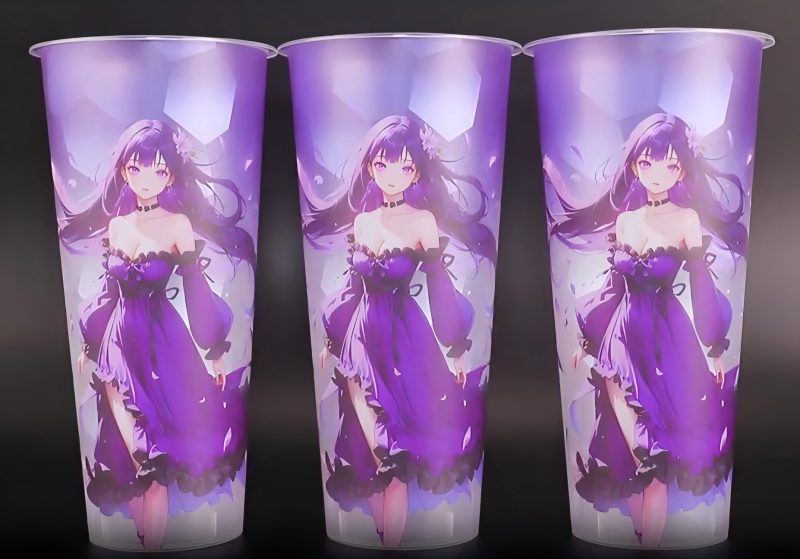
IML supports detailed graphics, photographic imagery, gradients, fine text and large decorated areas. This gives brands more freedom to create a premium shelf appearance directly on a plastic package.
Durable integrated surface
Because the label becomes part of the molded article, it is not simply a sticker sitting on top of the container. With the correct material and process combination, the finished decoration can offer strong resistance to normal handling, moisture and abrasion.
One-step molding and decoration
The decoration is completed during the molding cycle, which can remove a separate labeling stage and simplify downstream handling for suitable high-volume applications.
Suitable for automated production
IML works well with robotic label placement and automated molding systems. Reliable label feeding, separation and positioning are therefore important parts of label design and quality control.
Multiple visual finishes
Depending on film structure and printing requirements, IML can be developed in gloss, matte, pearlescent, white, clear and other decorative effects.
Potential for compatible material structures
When the label and container are designed with compatible plastic materials, IML can support a more unified material structure. Actual recyclability still depends on the complete package design, inks, additives, local collection systems and recycling infrastructure.
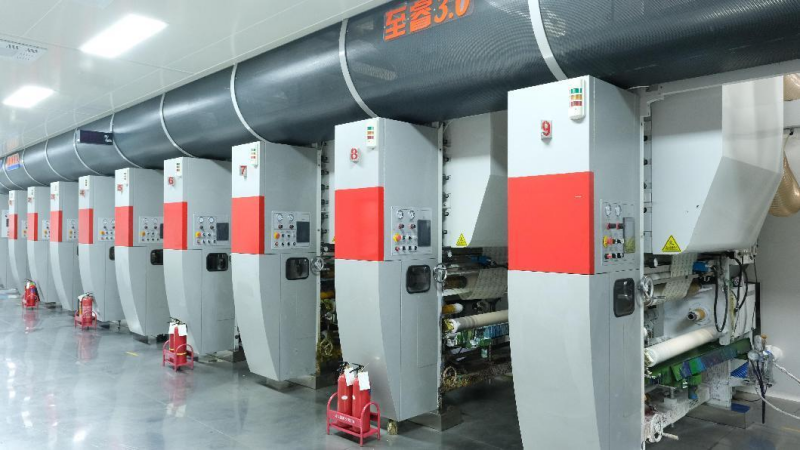
Printing equipment used in the production environment at Zhejiang Zhongyu Technology Co., Ltd.
Polypropylene-based films are widely used for in-mold labels, especially for polypropylene containers. Depending on the application, an IML film may be white, clear, cavitated, solid, gloss or matte, with a structure engineered for printing, feeding, static charging and bonding during molding.
Selecting the right film is not simply a matter of choosing the thinnest or most economical option. The label must work with the container resin, mold geometry, robot or feeding system, printing method, decoration area and molding conditions.
For this reason, the best IML material is application-specific. A film that works well on a large pail may not be the best choice for a small food tub, a thin-wall container or a highly curved part.
IML is an automated decoration process, so the label must do more than reproduce attractive graphics. It must also behave consistently in production.
Small variations in size, curl, flatness or cut quality can affect label separation, robotic pickup, electrostatic holding and positioning inside the mold. In high-speed molding, a minor inconsistency can repeat across thousands of cycles.
Key production factors therefore include color consistency, dimensional tolerance, clean die-cut edges, label flatness, stack behavior, static response and packaging methods that protect the labels during storage and transportation.
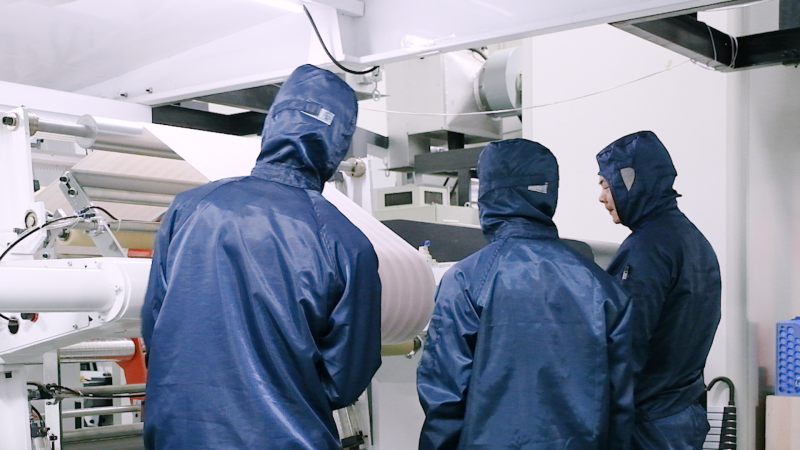
Technical production personnel monitoring web-processing equipment.
In-mold labels are used across a wide range of rigid plastic packaging and molded products. Typical applications include food tubs, dairy and ice-cream containers, beverage cups, lids, household storage products, cleaning-product packaging, detergent containers, paint pails, lubricant pails, industrial containers, toys and other decorated plastic articles.
IML is especially attractive when a project combines several requirements: high-volume production, large decorative coverage, good resistance to moisture, strong brand graphics and compatibility with automated molding.
Zhejiang Zhongyu Technology Co., Ltd. focuses on in-mold label and packaging printing applications. Our work covers the practical steps required to turn a graphic concept into a label that can perform reliably in a customer’s molding process.
We pay attention not only to print appearance, but also to material selection, converting accuracy, production consistency and application compatibility. For custom IML projects, communication between the label converter and the plastic molder is especially important because label performance is closely linked to the molding system and container design.
Printing and production control
Our production environment includes printing and converting equipment used to manufacture label products in controlled batches. Color, registration, surface quality and dimensional consistency are important checkpoints throughout production.
Testing and quality evaluation
Our laboratory and quality-control environment supports material and process evaluation for different label applications. Testing helps verify that materials and finished labels meet the intended handling and production requirements before shipment.
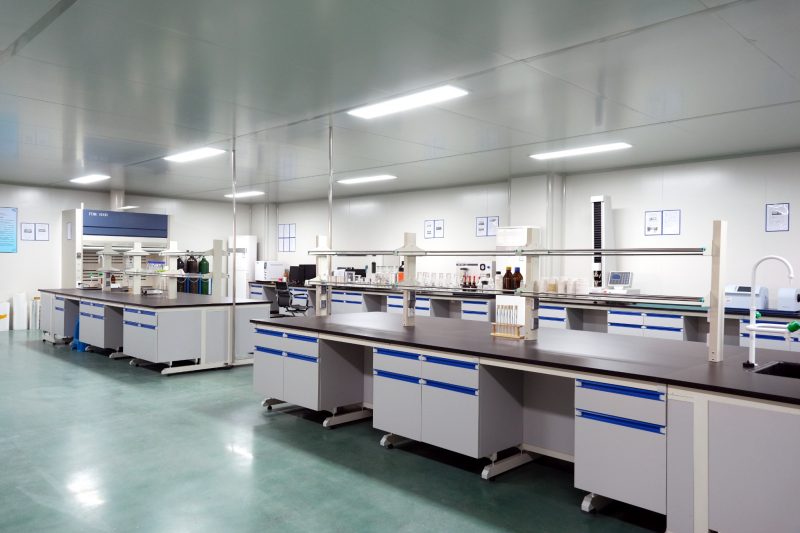
Laboratory and quality-control area at Zhejiang Zhongyu Technology Co., Ltd.
Film condition and storage can influence converting performance. Dedicated material storage and organized handling help protect rolls and support consistent production from incoming material through printing and finishing.
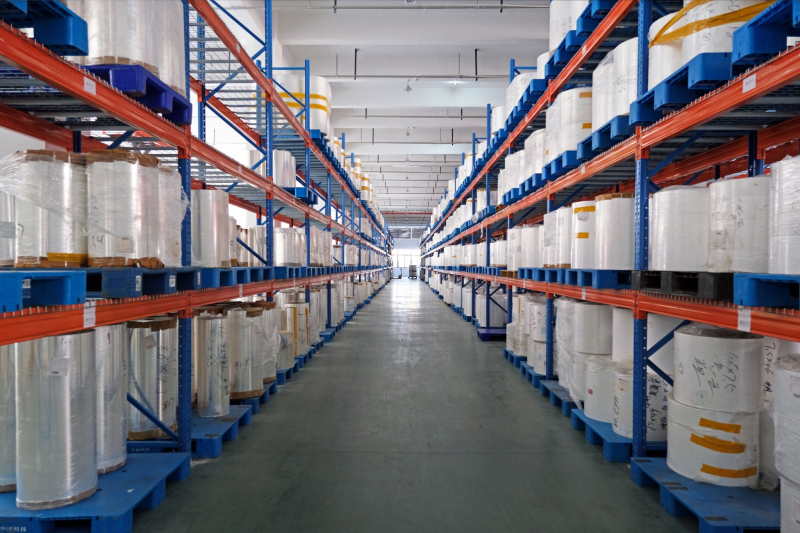
Material storage area at Zhejiang Zhongyu Technology Co., Ltd.
Price is important, but a successful IML project usually depends on more than the cost per label. A capable IML label manufacturer should understand both printing and the practical requirements of automated molding.
When evaluating a supplier, consider whether the company can discuss film selection, print performance, dimensional tolerances, die cutting, static requirements, label packing and actual molding-line compatibility. Consistency between production batches is particularly important for long-running programs.
It is also useful to involve the label supplier early in a new packaging project. Early communication can reduce avoidable issues with artwork, dielines, material selection and automation before mass production begins.
To evaluate a custom IML label efficiently, provide as much application information as possible. Useful project details include:
· Container or molded-part photos and drawings
· Plastic resin or container material
· Molding process (for example, injection molding or blow molding)
· Label size, dieline and decoration area
· Artwork files and color requirements
· Preferred finish such as gloss, matte, white or clear
· Target order quantity and expected annual volume
· Molding machine / robot information when relevant
· Any known issues from an existing label or production line
The more clearly the use conditions are defined, the easier it is to recommend an appropriate material and production route.
What does IML mean in packaging?
IML stands for In-Mold Labeling. A printed label is placed inside a mold before the plastic product is formed, and the label becomes integrated with the finished container or part during molding.
Do in-mold labels need adhesive?
IML labels generally do not use a separate pressure-sensitive adhesive layer. They are designed to bond or integrate with the plastic during molding. The exact bonding mechanism depends on the film and molding process.
What plastic is commonly used for IML?
Polypropylene is one of the most common materials used for both IML films and injection-molded containers, although the correct construction depends on the final application and molding system.
Can IML labels be matte or glossy?
Yes. IML can be developed with different surface appearances, including gloss and matte finishes, as well as white, clear and other visual effects depending on the selected film and printing process.
Are in-mold labels waterproof?
Plastic-film IML labels are well suited to moisture-exposed packaging when the correct material and ink system are used. Performance should always be evaluated against the actual filling, storage, transport and end-use conditions.
Are IML packages recyclable?
IML can support compatible or mono-material-oriented package design when the label and container use compatible plastics. Whether a finished package is recyclable in practice depends on the complete material structure and the recycling infrastructure available in the target market.
What is the minimum information needed for an IML quotation?
A supplier can usually begin with a product photo or drawing, label dimensions, container material, required finish, artwork and expected quantity. For a more accurate technical recommendation, molding and automation details are also helpful.
A successful in-mold label combines graphic design, film engineering, printing, die cutting and molding compatibility. The goal is not only to create an attractive label, but to create a label that can move through an automated production environment consistently and become an integral part of the finished plastic package.
For brands and plastic packaging manufacturers seeking durable decoration, strong shelf impact and efficient high-volume production, IML can be an effective solution when the label, container and molding process are designed together.
Zhejiang Zhongyu Technology Co., Ltd. welcomes IML label inquiries for food packaging, household products, industrial containers and other plastic applications. Share your container drawing or photo, label dimensions, material requirements and expected volume, and our team can discuss a suitable IML label solution for your project.
Zhejiang Zhongyu Technology Co., Ltd.
Custom In-Mold Labels • IML Printing • Plastic Packaging Decoration