If you're planning to upgrade your product packaging, comparing IML labels versus pressure-sensitive or shrink-sleeve labels, or looking for a reliable in-mold label source manufacturer—this article is for you. About a 5-minute read, recommended to bookmark.
✓ What IML (In-Mold Labeling) is, and how it differs from traditional label processes
✓ 6 core advantages of IML labels (explained in one comparison table)
✓ 7 typical application scenarios (with real customer cases)
✓ The complete production process from film to finished product
✓ 5 buyer's-guide tips to avoid pitfalls when choosing an IML manufacturer
1. What is IML? A Quick Look at the In-Mold Labeling Process
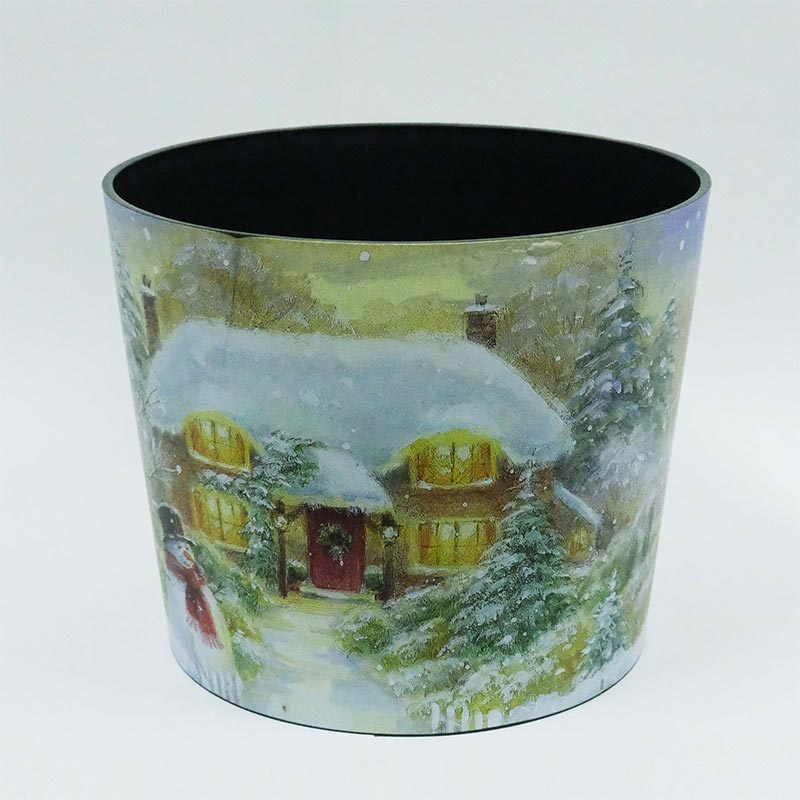
In-Mold Labeling (IML)—also known as in-mold labels, IML films, or membrane labels—is a decoration process in which a pre-printed label is placed inside an injection or blow mold by a robotic arm. As the molten plastic fills the cavity, high temperature and pressure fuse the label and the container into a single, permanent piece.
In short:
"The label and the plastic container are "grown" together inside the mold—not applied afterwards."
Alternative terms you may come across: in-mold labels, IML film, in-mold label, membrane label, in-mold decorating, IML decoration, IML sticker, IML in mold label.
7 Core Steps of the IML Process
1. Film Printing: Print patterns, text, and barcodes on PP/PE/PET film using gravure, offset, or digital presses.
2. Ink Drying & Curing: Use a high-temperature oven to cure and set the inks.
3. Laminating Protective Film: Apply a protective film to prevent damage to the ink layer during die-cutting.
4. Punching Registration Holes: Punch precise registration holes to ensure accurate label pickup by the robot.
5. Thermoforming (High Pressure or Copper Mold): Form the flat printed film into a 3D shape that matches the container.
6. Trimming Outer Shape: Cut off the excess edge material.
7. Injection / Blow Molding: Place the formed film into the mold; molten plastic bonds the label to the container in one shot.
IML is a subset of IMD (In-Mold Decoration), which covers a broader range of in-mold decorative film technologies. IML is the labeling-specific branch.
2. 6 Core Advantages of IML Labels (vs. Traditional Labeling)
Many first-time buyers ask: "Compared to pressure-sensitive labels, shrink sleeves, or silk-screen printing—is IML more expensive? Is it worth it?"
Comparison
IML Label
Pressure-Sensitive Label
Shrink-Sleeve Label
Silk-Screen Printing
Bonding to Container
One-piece molding; never falls off
Adhesive; can peel or lift
Wraps container; edges tear easily
Surface print; wears off
Water / Oil / Chemical Resistance
✓ Excellent
△ Average
△ Average
△ Average
Print Resolution
High definition; photo quality
High definition
Medium
Medium-low; small text unclear
Color Effects
CMYK + spot colors; metallic, pearlescent, UV
CMYK + spot colors
Mainly CMYK
Limited colors
Anti-Counterfeit
Strong (mold + process barriers)
Weak
Weak
Weak
Production Efficiency
One-shot forming; high efficiency
Extra labeling step
Extra sleeve-applying step
Item-by-item printing
Recyclability
Same material as container; directly recyclable
Must separate label and liner
Difficult to separate
Ink contaminates bottle
3D Forming Capability
Flat / curved / wrap-around / irregular
Flat only
Whole-body wrap
Mostly flat
One-line summary: IML = High print quality + One-piece molding + Anti-counterfeit + Eco-friendly. The total cost is actually lower.
Why is the "Total Cost" Lower?
It's true that the per-label unit price of IML is higher. But don't forget—IML eliminates post-mold labeling processes, manual labor, equipment, and scrap.
· No manual labeling step: automation line efficiency improves 30%–50%
· No labeling equipment investment: saves hundreds of thousands in capex
· Less scrap: pressure-sensitive label scrap rate is typically 3%–8%; IML is near zero
· Less resin needed: the label reinforces the sidewall strength by ~20%, allowing thinner walls
� One of our clients switched from pressure-sensitive labels to IML and saw a 12% drop in per-cup total cost, saving over USD 280K per year.
3. 7 Typical Application Scenarios of IML Labels
IML labels are used across a very wide range of plastic packaging. Here are the 7 most common scenarios:
Representative clients: China Eastern Airlines Catering
▎ 6. Events / Co-branding / IP Customization
Applications: Festival editions, anime collaborations, sports-event custom packaging
▎ 7. Creative Packaging Upgrades
Applications: Thermochromic cups, glow-in-the-dark cups, light-up cups, rotating cups, rainbow cups, 3D transformation cups, anti-crack cups, embossed 3D cups
�Many milk-tea and coffee brands now treat IML labels as a "social-media star"—strong 3D visuals and built-in shareability can lift per-cup price by 10%–20%.
4. Complete IML Production Process (11 Steps Explained)
Many customers are curious how a single IML label is actually made. Here's a full breakdown of the 11 steps:
Step
Process
Key Control Points
1
Film Selection
Choose PP/PE/PET based on container material; determines shrinkage matching
2
Surface Treatment
Corona treatment to improve ink adhesion
3
Flat Printing
Gravure / offset / digital; CMYK + spot colors
4
Ink Drying
High-temperature oven curing
5
Laminating Protective Film
Prevents die-cutting scratches
6
Punching Registration Holes
Tolerance ±0.1 mm
7
Thermoforming
High pressure or copper mold; forming temperature 120–160°C
8
Edge Trimming
Remove excess edge material
9
Boxing
Stack single sheets into the IML labeling machine
10
Injection / Blow Molding
Place label in mold; one-shot molding
11
Inspection & Packaging
100% inspection or sampling; reject defects
⚠ Key Reminder: Step 7 (Thermoforming) is the most failure-prone stage. If temperature, pressure, or time are not controlled precisely, the formed film can show uneven stretching, wrinkles, or edge whitening. This is where a manufacturer's craftsmanship really shows
5. Buyer's Guide: 5 Tips to Avoid Pitfalls When Choosing an IML Manufacturer
The IML label industry looks simple, but doing it well is hard. After seeing many customers fall into traps, we summarize 5 selection criteria:
✅ 1. Years in Business & Focus
IML combines printing + injection + material science. It takes 5–10 years of accumulation to do it well. Prefer manufacturers established before 2015 that have always focused on IML.
✅ 2. Production Equipment & Line Count
High-speed electronic-shaft gravure presses (e.g., Xinda, Huitong) are the baseline. At least 3–5 IML production lines, plus laminators, sheet cutters, and thermoforming machines.
✅ 3. Certifications
ISO 9001 Quality Management (baseline); ISO 22000 Food Safety (mandatory for food-grade); EU BRCGS Global Standard for Packaging Materials (mandatory for export); High-Tech Enterprise (plus); Specialized & Sophisticated "Little Giant" (plus).
✅ 4. Patents & R&D Capability
The IML process barrier lies in patents. Manufacturers that can independently develop thermochromic, photochromic, anti-crack, embossing, and imitation-electroplating processes are the real technical players.
✅ 5. Client References
Fortune 500 brands have extremely strict supplier audits. If a manufacturer can steadily serve clients like Starbucks, Nestlé, and Yili, their quality control and service will not disappoint.
Zhejiang Zhongyu Science and Technology Co., Ltd. (YZY), founded in 2010 and headquartered in Longgang City, Wenzhou, Zhejiang Province, is one of the earliest professional IML label printing companies in China.
6.1 Company Strength at a Glance
Metric
Data
Founded
October 2010
Registered Capital
CNY 30 Million
Factory Area
25,000 m² (Huahong Smart Manufacturing Park)
Employees
200+
Production Lines
5 high-speed IML label lines
Annual Capacity
60 million m²
Domestic Market Share
40%+
Total Patents
65+
Cumulative Brand Clients
500+
6.2 Certifications (Most Comprehensive in the Industry)
· ISO 9001:2015 Quality Management System
· ISO 22000:2018 Food Safety Management System
· EU BRCGS Global Standard for Packaging Materials
· National High-Tech Enterprise (2024)
· Zhejiang Provincial "Specialized & Sophisticated" SME
· Lead drafter of the Zhejiang Made Group Standard "Composite IML Labels for Injection Molding"
6.3 Representative Clients
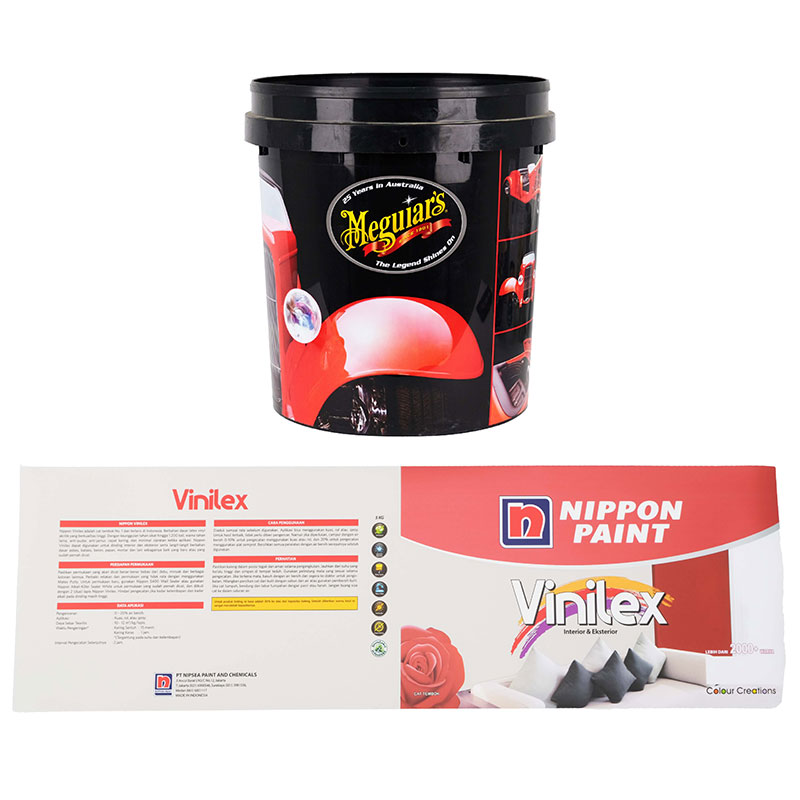
Starbucks, Nestlé, Yum China, Unilever, Nippon Paint, Oreo, Mengniu, Yili, Daliyuan, Guming, Nayuki, China Eastern Airlines Catering… essentially covering the top brands in food, daily chemicals, and petrochemicals.
6.4 Specialty Process Matrix
On top of standard IML, YZY has independently developed multiple specialty IML processes to meet differentiated brand needs:
• Rainbow IML: Cup appears transparent when empty; reveals a rainbow when filled with drink.
• Thermochromic / Cold-Chromic IML: Changes color with hot or cold liquids; "alive" packaging.
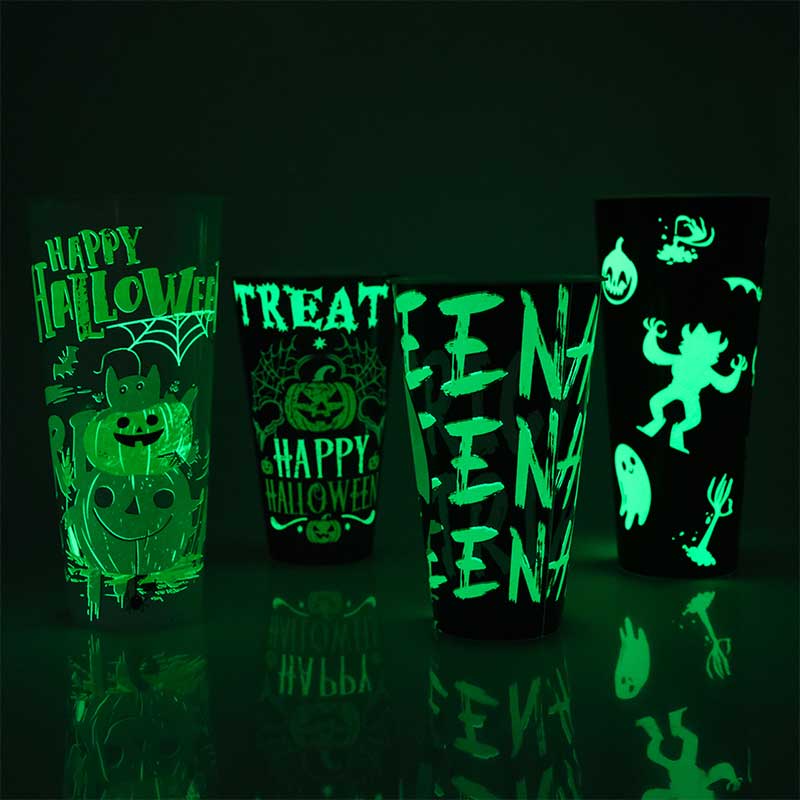
• Glow-in-the-Dark IML: Glows in the dark; a Halloween best-seller.
• Light-Up IML: Built-in LED light source; high-tech look.
• Rotating / 3D Transformation IML: Pattern changes as the cup rotates; naked-eye 3D.
• Metallic IML: Imitation brushed metal, matte, and gloss finishes.
• PP Photochromic IML: Color shifts with viewing angle.
• PP Embossed / 3D Relief IML: Tactile 3D feel; a hit for milk-tea co-branding.
• Imitation Electroplating IML: Replaces real electroplating; eco-friendly and low-cost.
• Color-Changing IML: Thermochromic color shift (Patent CN110660316B).
6.5 One-Stop Service Capability
· In-house production of printing + IML labels + sealing film + aluminum foil
· 24-hour quote response; expert team answers technical questions
· Full-process tracking: design draft → print sample → injection trial → mass production
· Flexible MOQ: digital printing from 500 pieces; no threshold for traditional-process bulk orders
7. Cooperation Process
Requirement Discussion → Process Evaluation → Quotation & Sampling → Client Confirmation → Mass Production → Inspection & Delivery → After-Sales
Stage
Discussion
Evaluation
Sampling
Confirm
Production
Inspection
After-Sales
Lead Time
1 day
1–2 days
3–5 days
1 day
7–15 days
100% QC
Long-term
Contact Information
· Phone: +86 18267781866
· Email: yzy@inmoldlabel.net
· Address: Building 58, 1F & Building 59, E Zone, Longgang New City Pioneer Park, Longgang City, Wenzhou, Zhejiang, China
· Factory Visits: Welcome by appointment
8. Frequently Asked Questions (Q&A)
Q1: What is the MOQ for IML labels?
Traditional processes are typically recommended for large-volume runs (depending on size and process), but YZY supports digital printing from 500 pieces—ideal for new-product sampling and small-batch customization.
Q2: How is the IML label price calculated?
Main factors: size, process (standard / thermochromic / metallic / glow / etc.), number of printing colors, and order volume. Send us your drawings for a quote; we'll provide a solution within 24 hours.
Q3: Can IML labels be used on irregular containers?
Yes. IML works on flat, curved, wrap-around, and irregular shapes, including round, square, multi-contour, thin-walled, and asymmetric containers.
Q4: Are IML labels eco-friendly?
Yes. IML label material matches the container (mostly PP/PE) and can be crushed and recycled together without separation—fully aligned with green packaging and circular-economy requirements.
Q5: Do IML labels fall off?
No. IML labels are fused with the container via high-temperature melting during molding—they never peel, wrinkle, or lift. This is IML's biggest advantage over pressure-sensitive labels.
Q6: Can YZY produce food-grade IML labels?
Yes. We are certified to ISO 22000 Food Safety Management and EU BRCGS standards, and we have long-term supply agreements with food brands including Starbucks, Yili, Mengniu, and Daliyuan.
Q7: Are IML labels anti-counterfeit?
Yes. The high mold cost and complex printing process make IML inherently a "process-level anti-counterfeit" solution. We can also add physical anti-counterfeit features such as anti-counterfeit beads, fluorescent layers, and QR codes.
Q8: How do overseas clients work with YZY?
We support worldwide shipping and online collaboration. We have a mature remote-cooperation workflow: sample delivery → remote sampling → on-site mass production, with a dedicated contact throughout.
Final Thoughts
IML labels are still in the early adoption stage in China (85%–95% of European food packaging uses IML, vs. less than 30% in China), but the market is growing fast.
If you're looking for a professional, stable, R&D-driven IML label manufacturer, Zhejiang Zhongyu is your partner. We've spent 15+ years doing one thing: crafting the perfect label.
Zhejiang Zhongyu Science and Technology Co., Ltd. (YZY)
Every product deserves to be seen at its best.
—— One of the earliest professional IML label manufacturers in China · Trusted by 500+ brands ——
We use cookies to offer you a better browsing experience, analyze site traffic and personalize content. By using this site, you agree to our use of cookies. Privacy Policy